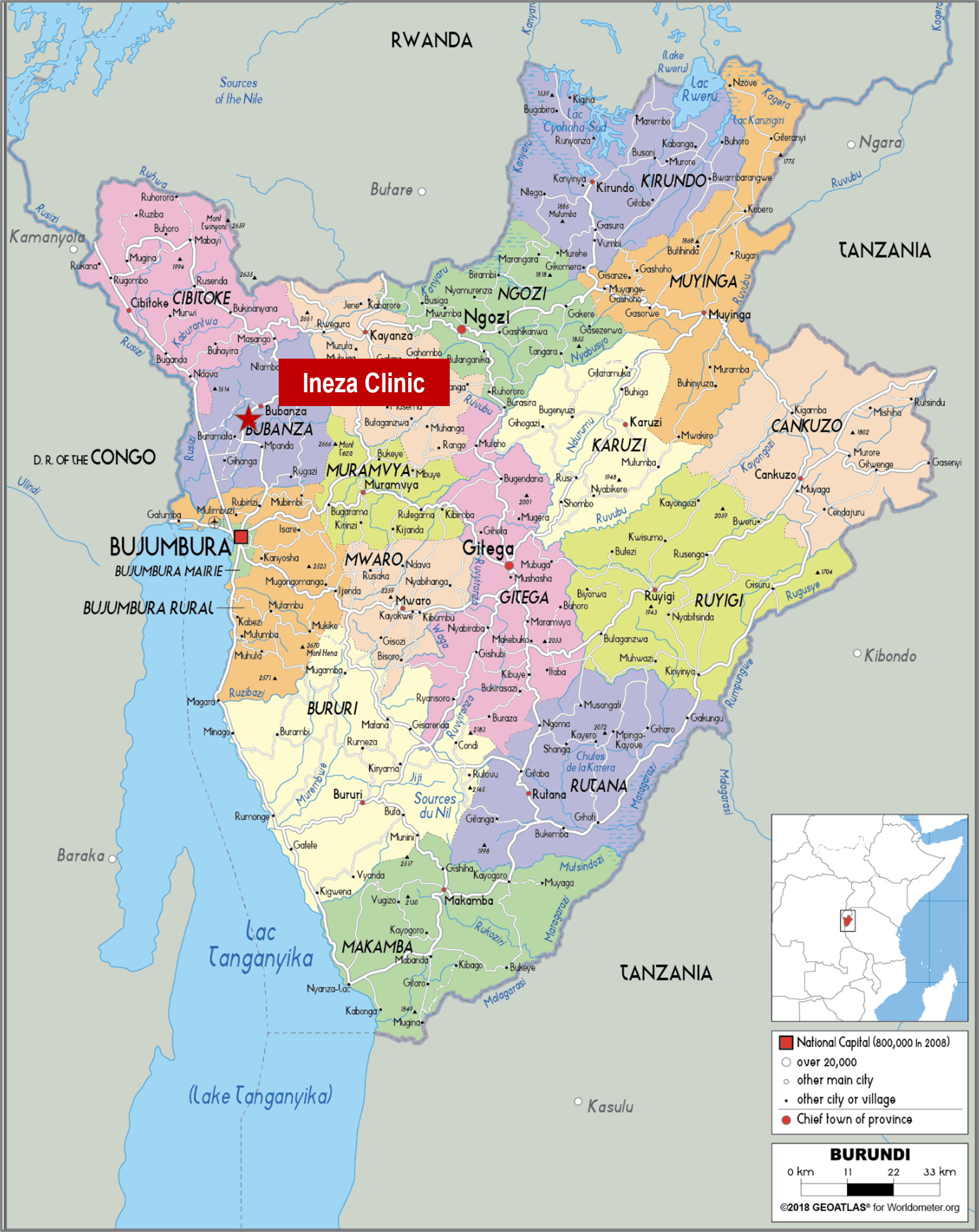
Burundi
Burundi, a small, landlocked country in East Africa, with a GDP of about $250 per capita, is one of the poorest countries on Earth. Its economy is heavily reliant on agriculture; 90% of its population of 14.2 million depends on subsistence farming for their livelihood. Less than 12% of the population have access to electricity.
The average life expectancy has grown from just 44 years in the year 2000 to 64 years in 2024 – but poverty, limited access to quality healthcare, inadequate sanitation, and acute malnutrition continue to adversely affect the health and well-being of the population.
Women on average bear 5 children and the chances of a woman dying from pregnancy or childbirth-related causes are 1 in 57 over her lifetime or close to 2%. 1 in 20 children under 5 die before their fifth birthday, with malaria accounting for up to 69% of those deaths. In addition, due to widespread malnutrition, roughly 57% of children under five suffer from stunting/growth retardation, which affects not only their physical, but also their mental development.
The inability of the government to properly fund health care has led to a large exodus of trained health staff to Europe and other African countries. The entire country has less than 1,000 general doctors (only 0.6 doctors per 10,000 population) and only about 125 specialists.